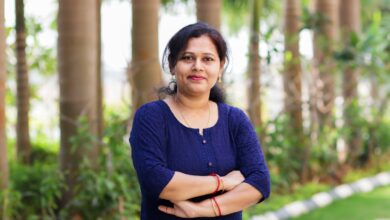
From the Collectorate to the Crucible of Verse

How an SDM in Uttar Pradesh found that serving the state and serving the soul are not so different one word at a time.
A bureaucrat’s desk is rarely associated with poetry. Files, stamps, orders, appeals are its natural inhabitants. Yet on the desk of Naman Mehta, Sub-Divisional Magistrate in Uttar Pradesh, something else lives alongside the registers and the red tape: an instinct to look closely at people, to feel what they carry and to find words for it.


Perhaps it is no surprise. Mehta is from Varanasi, the city that has never allowed anyone to look away from life. Sitting on the banks of the Ganga, older than history itself, Varanasi is a place where birth and death share the same ghat, where a morning prayer and a funeral pyre occupy the same stretch of riverbank. To grow up there is to understand early that beauty and sorrow are not opposites. They are neighbours. That understanding runs through everything Mehta writes.
He writes under the pen name Bhikshatan, drawn from the Sanskrit figure of the wandering mendicant who moves through the world receiving alms of experience. Varanasi has always been a city of such wanderers, of sadhus and seekers and poets who found in its lanes and ghats the full weight of human existence. Bhikshatan carries that inheritance into his work. Every day in the collectorate, citizens walk in carrying the full weight of their circumstances. Land disputes, grievances, loss, hope. Most administrators process this. Bhikshatan absorbs it and writes.
Being an SDM means governing at the ground level where policy meets the person. Law and order, revenue administration, public grievances: the SDM is often the first face of the state that a citizen encounters in a moment of crisis. It demands discipline, authority and a great deal of patience. It also quietly demands empathy. Mehta has turned that empathy into literature. His blog at bbureaucrat.wordpress.com has been a quiet steady record of a mind that refuses to stop at the official. Stories, poems, reflections. The writing of a person who sees the human being behind every file number.
His debut poetry collection Under the Garb is a book of raw emotions put to work. It belongs to what Mehta calls the tell-tale genre, poetry that does not simply describe feeling but performs it, letting the reader walk into the poem as one walks into a room and suddenly recognises something familiar. The book’s own spirit is best captured in its dedication: a crucible of emotions wherein each poem is an outpour of raw feelings, words plucked as flowers and decorated as a bouquet of poetry. Some poems have been cried upon, some are infuriating, some follow sorrow and some convey love. Yet the real meaning as Bhikshatan insists still lies with the reader.
What makes this collection stand apart is its deliberate openness. Bhikshatan does not close his poems with a fixed meaning. He opens them and steps back. The reader is invited to complete the work, to bring their own grief, their own love and their own fury to the page and find it mirrored. For an SDM whose professional life demands clear judgements and final orders this creative surrender is striking. But then Varanasi has always taught its own that certainty is an illusion and that the truest things resist conclusion.
Bhikshatan’s stated philosophy is to celebrate the tragedy of life through stories, art and poems. Not to escape it. Not merely to document it. To celebrate it, which is to say to honour it, to hold it up to the light and find within it something that endures. This is a very Varanasi way of seeing the world. The city has been celebrating its own tragedy for thousands of years, finding in the smoke of its cremation grounds not despair but a strange and ancient peace. Mehta carries that sensibility into the corridors of governance and onto the page.
The 21st Century Emily Dickinson Award lands with particular resonance for a writer like him. Dickinson herself never sought fame. She wrote in solitude, her poems arriving sidelong at the truth. Bhikshatan works the same method, not from a garret but from an administrative office in UP, finding in the ordinary business of government the material for verse that cuts quietly and deep. The award acknowledges not just craft but a kind of courage, the courage to remain a feeling person inside a system that does not always reward feeling and to make something lasting out of that tension.
Naman Mehta makes a persuasive case simply by living it, that public service and creative life are not opposed. Both require attention. Both require honesty. Both ask you to sit with another person’s reality and take it seriously. The SDM writes the order and the poet writes the poem. Both are at their best acts of care. Under the Garb is the record of a man shaped by the oldest city in the world, who has paid close attention to everything it taught him and found that it has far more to say than any official document can hold.
- TITLE: Under The Grab
- AWARD: 21st Century Emily Dickinson Award
- BOOK LINK: Under The Grab
- INSTAGRAM : @MNAMAN018